
Hong Kong’s Five-Year Plan: Building the Next Transport Network
Hong Kong’s first Five-Year Plan puts transport at the heart of its next stage of growth — from new railways and highways to smarter, cross-boundary links with mainland China.
The Northern Powerhouse
On 16 September 2026, the Hong Kong Government released its first Five-Year Plan for Economic and Social Development (2026–2030). The Plan marks a shift from long-term thinking to actual delivery. Transport infrastructure is the backbone of the plan — supporting the Northern Metropolis and strengthening links with Shenzhen and the wider Greater Bay Area (GBA).
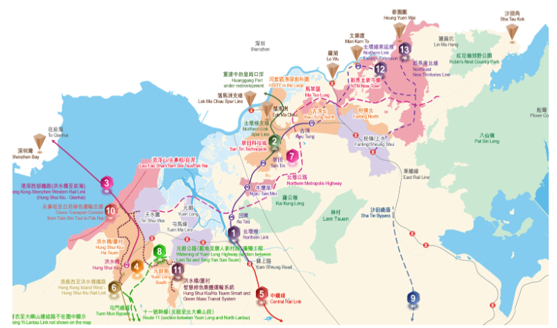
Figure 1. Key transport projects in the Northern Metropolis, including the Northern Link, the Hong Kong–Shenzhen Western Rail Link, Route 11 and the Northern Metropolis Highway. Source: Hong Government
A more extensive, connected network
The Plan’s central idea is simple: build a network, not just a list of separate projects. The Government calls this the “Eight Vertical and Eight Horizontal” layout — five north–south and five east–west railway corridors, plus three north–south and three east–west road corridors. Together, they are meant to connect the Harbour Metropolis, the Northern Metropolis, the New Territories and the boundary crossings into one cohesive system.
This idea builds on the Transport Strategy Blueprint published in February 2026. It sets out three simple goals — “Enjoyable Journeys”, “Well-connected City” and “Healthy Mobility” — backed by six strategies and 25 recommendations. Public transport stays the priority, but there is now more emphasis on smart mobility, AI, autonomous vehicles, green travel and modern interchange hubs.
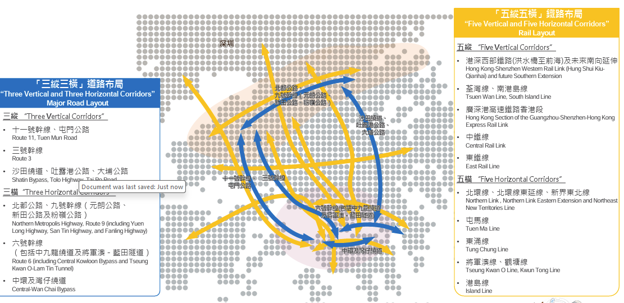
Figure 2. A simplified illustration of the “Eight Vertical, Eight Horizontal” concept — 5 rail + 3 road corridors running north–south, and the same running east–west.
-
Important Key Dates
Here is what is actually scheduled to happen, and when:
● 2027 — Kwu Tung Station opens, becoming the 100th heavy-rail station in Hong Kong.
● 2029–2030 — The Tung Chung Line Extension, Hung Shui Kiu Station, Tuen Mun South Extension and Oyster Bay Station open in stages.
● By 2030 — Trunk Road T4 in Sha Tin is completed, and construction on the Northern Metropolis Highway’s San Tin Section moves forward.
● Beyond 2030 — The Northern Link (Main Line and Spur Line) is targeted for 2034, and the Hong Kong–Shenzhen Western Rail Link for 2035. Tsing Lung Bridge and first section of Northern Metropolis Highway completion targeted for 2033 and 2034 respectively
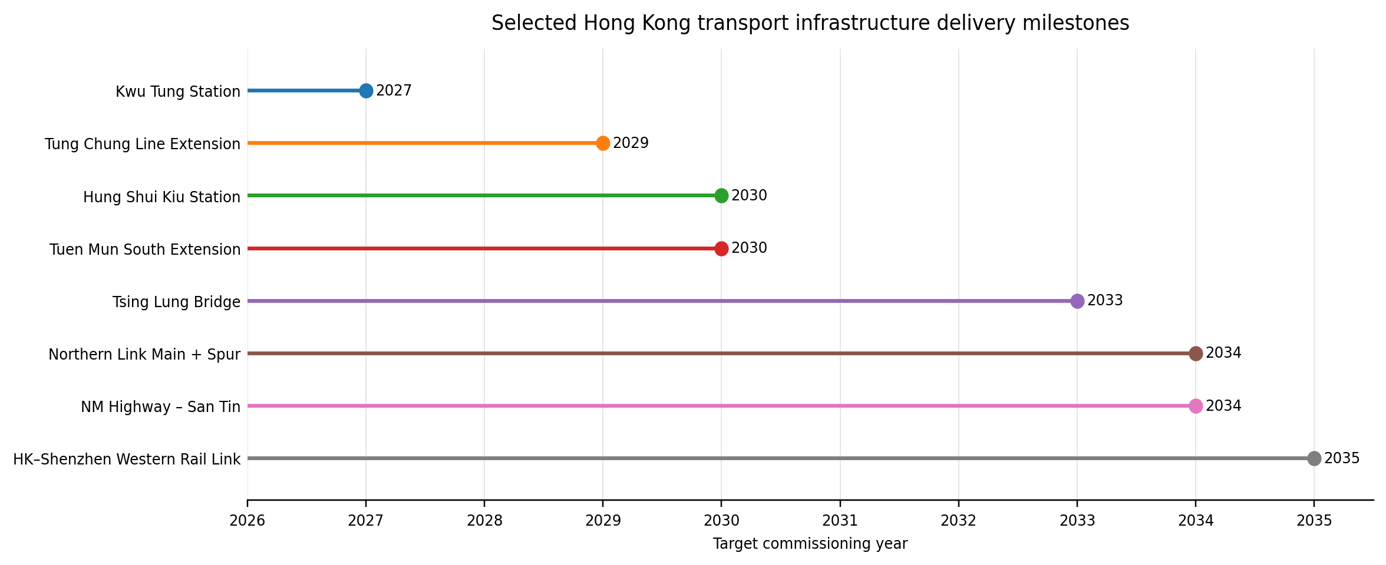
Figure 3. HKSAR Government target completion dates
-
The Northern Metropolis leads the way
Nowhere shows this approach better than the Northern Metropolis. The Plan describes it as a new engine for growth — built around university towns, innovation and technology, industry, and new communities. Importantly, transport is being planned alongside housing and jobs, not added on afterwards.
The Northern Link is currently the transport centrepiece. Its Main Line runs about 10.7 km from Kam Sheung Road to Kwu Tung, through San Tin, Ngau Tam Mei and Au Tau. Construction started in 2025, and commissioning is targeted for 2034 or earlier. A Spur Line with a further two stations will extend it to the newly opened Huanggang Port in Shenzhen, with both lines planned to open simultaneously.
Further west, the proposed Hong Kong–Shenzhen Western Rail Link will run underground for about 18.1 km — 7.3 km in Hong Kong and 10.8 km in Shenzhen — with stations including Hung Shui Kiu, Ha Tsuen, Lau Fau Shan, Shenzhen Bay Port and Qianhaiwan. Tendering for the Hong Kong section is expected in 2027, with commissioning targeted for 2035.
ents a core project.
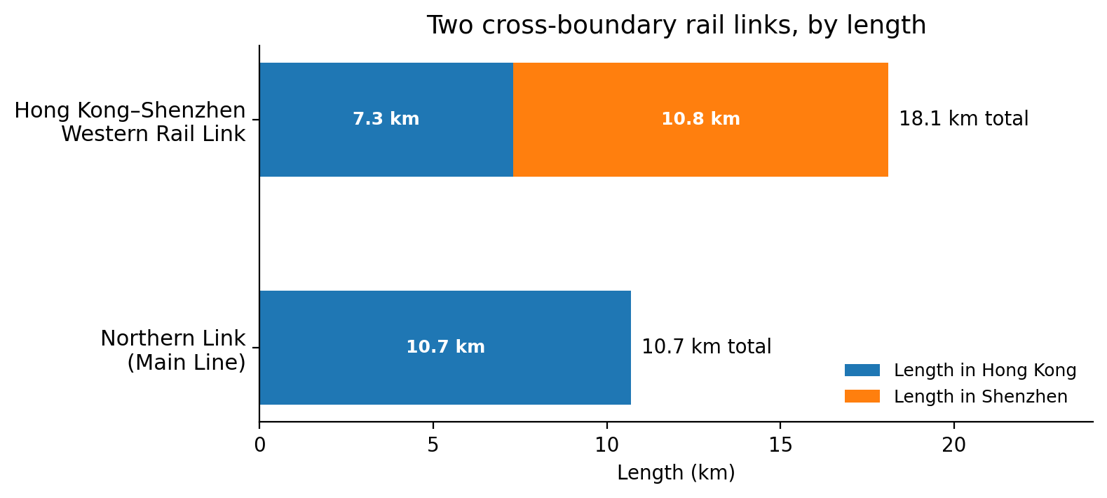
Figure 4. Cross-boundary underground railway length in Hong Kong versus Shenzhen.
Timing Considerations
It helps to think of 2026–2030 as a launch period, not a finish line. Some projects will open in this window; several bigger ones will only commission afterwards. That sequencing is deliberate.
Progressive delivery of the Northern Metropolis transport infrastructure will support the jobs, homes and schools planned around it. At the same time, new transport capacity only pays off if housing, community facilities and employment keep pace with it — the two have to move together.
The cross-boundary projects also serve a bigger purpose. The Northern Link Spur Line and the Western Rail Link are not just about local commuting — they are designed to further integrate Hong Kong’s and Shenzhen’s railway networks and support closer economic ties and integration across the boundary.
Conclusion
Hong Kong’s 2026–2030 Five-Year Plan puts transport infrastructure at the centre of its development strategy. Its key features are: an infrastructure-led approach, a strong focus on the Northern Metropolis, a territory-wide “Eight Vertical and Eight Horizontal” network, deeper cross-boundary links, and greater use of technology.
The real question for the next five years is not whether Hong Kong needs this infrastructure, but how efficiently it can be delivered. The period to 2030 is when strategic plans must turn into statutory approvals, procurement and construction. For the infrastructure industry, that means sustained demand for planning, programme management, engineering, construction and claims expertise across a large and highly connected portfolio of major works.
About Contract Dispute Consultants
With offices in Hong Kong and Singapore, CDC are Asia’s leading claims and contractual consultancy providing support to first tier contractors working on complex infrastructure and building projects worldwide. We work to manage and minimise contractual risk to assist contractors in negotiating early resolution of issues before they escalate. Recent assignments have included advising contractors on NEC3 and NEC4 projects involving metro, tunnels and water works across the Northern Metropolis. Other assignments have included rail projects in Canada and Hong Kong, cable stayed bridges in the United States, Canada and Hong Kong, power projects in the UK and airport projectsand programme support to contractors for tenders and live projects.


